
Suzuki Grand Vitara: Head Restraints
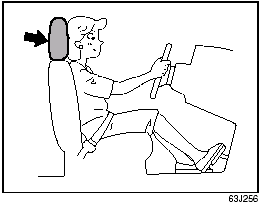
Head Restraints
Head restraints are designed to help reduce the risk of neck injuries in case of an accident. Adjust the head restraint to the position which places the center of the head restraint closest to the top of your ears. If this is not possible for very tall passengers, adjust the head restraint as high as possible.
 WARNING:
• Never drive the vehicle with the head restraints removed.
• Do not attempt to adjust the head restraint while driving.
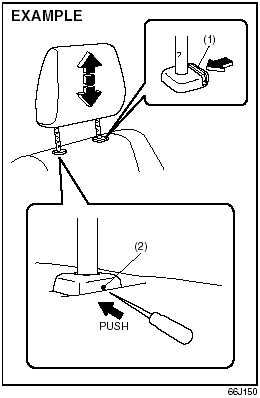
Front
To raise the head restraint, pull upward on the restraint until it clicks. To lower the restraint, push down on the restraint while holding in the release knob (1). If a head restraint must be removed (for cleaning, replacement, etc.), use the following procedure.
1) Insert a sharp-pointed tool into the small hole (2). Push the tip into the hole (2) and hold it while pushing in the release knob (1). 2) Pull the head restraint all the way out while pushing the release knob (1) and holding the tip in the hole (2).
NOTE: It may be necessary to recline the seatback to provide enough overhead clearance to remove the head restraint.
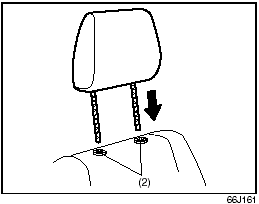
To reinstall the head restraint, insert the head restraint bars into the holes (2) and push the head restraint down.
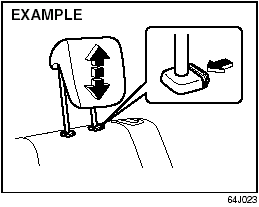
Rear
To raise the rear head restraint, pull upward on the restraint until it clicks. To lower the restraint, push down on the restraint while holding in the release knob. If a head restraint must be removed (for cleaning, replacement, etc.), push in the release knob and pull the head restraint all the way out. When installing a child restraint system, raise the head restraint to the most upper position.
 Seat Adjustment
See also:
Control panel buttons — color screen with navigation
system (if so equipped)
Control panel buttons — color screen with navigation
system (if so equipped)
1. (brightness control) button
2. Display screen
3. MAP button*
4. NAV button*
5. TRAF button*
6. SETUP button
7. BACK button
8. TUNE/SCROLL knob
9. ...
Exterior care
Exterior general caution It is very important to follow the label directions
when using any chemical cleaner or polish. Read all warning and caution statements
that appear on the label. Finish maintenance Washing To help protect your vehicle’s ...


